Designing a Cross-Platform Product for Field Engineers
Client
Clirio | Cross-Platform Product Design
Year
2017 – 2021 (Primary), 2025 – Present (Ongoing Contract Work)
The Challenge
Field engineers and Fortune 500 stakeholders needed a way to visualize and collaborate on highly complex geological data (both above and below ground) without getting lost in dense spreadsheets or static 2D maps. The challenge was designing a product experience that worked seamlessly across mobile devices (iOS) and spatial computing headsets (HoloLens, Oculus, Vision Pro) while making technical data intuitive for teams worldwide.
The Solution
I designed an end-to-end cross-platform product experience spanning iOS, web, and XR headsets. I built a comprehensive design system in Figma that ensured consistency across all platforms, then executed the final mobile app that field teams used daily. By turning raw topographical data into navigable 3D "digital twins," I improved field team efficiency by 135%. The intuitive UI eliminated communication friction and directly improved on-site productivity for engineering teams at Fortune 500 companies.
Scope of Work
Spatial Data Visualization for Enterprise
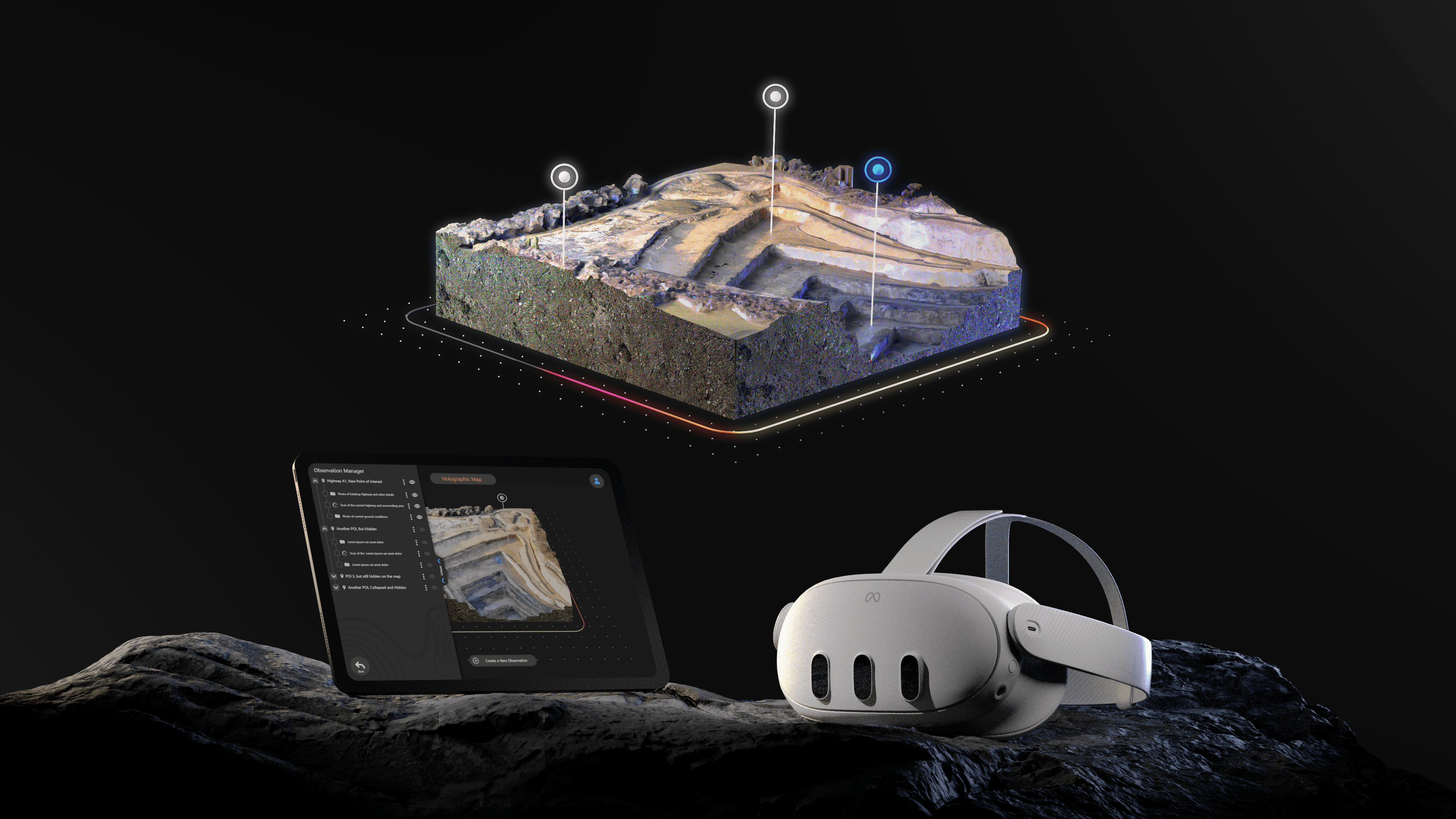
Designing for enterprise geology required a UI architecture that could flex across different hardware constraints. I created a cross-platform experience where field workers seamlessly transition from high-fidelity, top-down mapping on mobile devices to fully volumetric, interactive worksite models in mixed reality.
Immersive Data Exploration
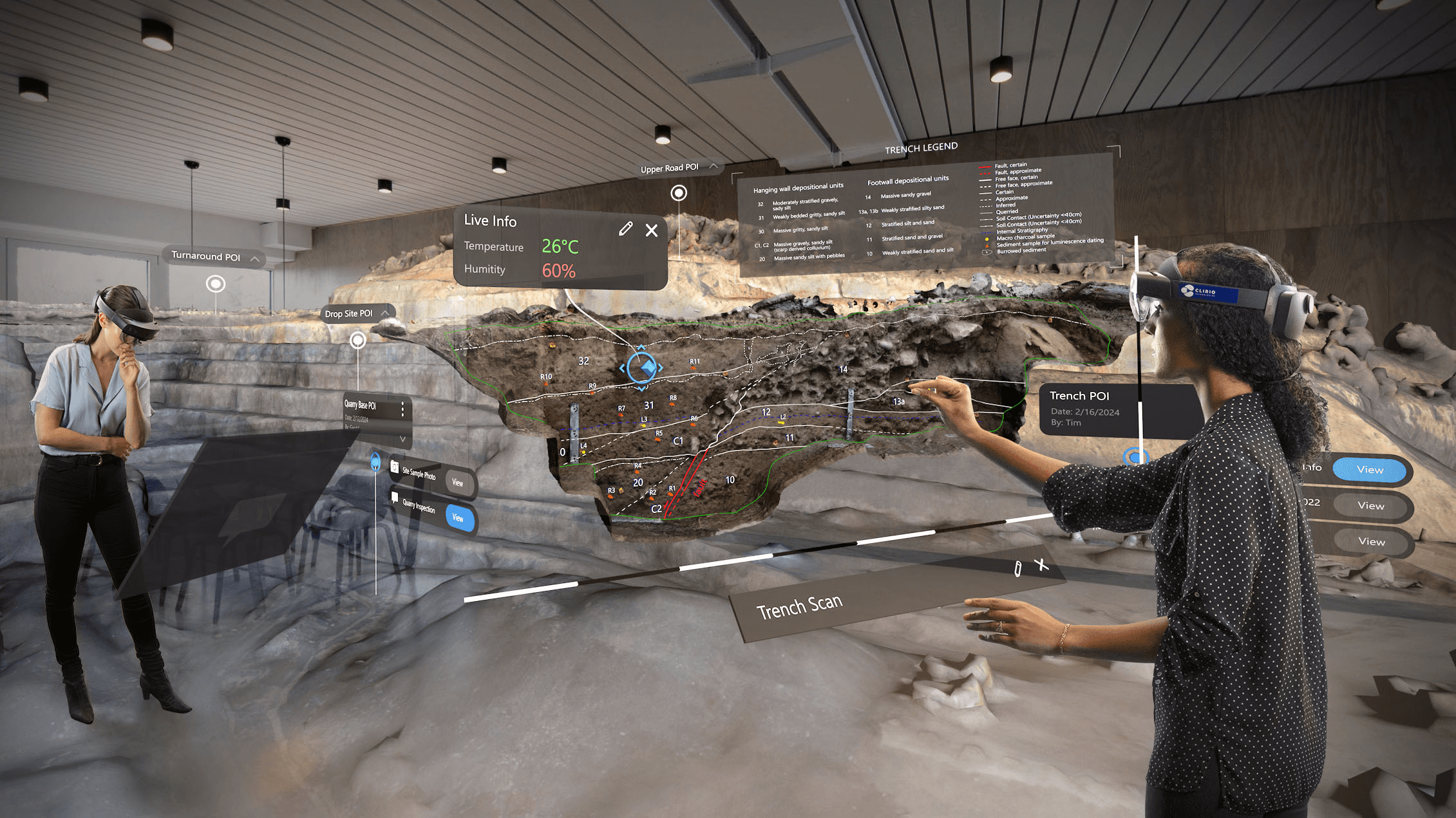
This multi-user XR session allows engineers to interact with live telemetry, scale indicators, and site annotations simultaneously within a 3D digital twin. By putting the user inside the data, the interface reveals critical insights that a traditional flat map could never communicate. This work improved field team efficiency by 135%.
Building a Cross-Platform Design System
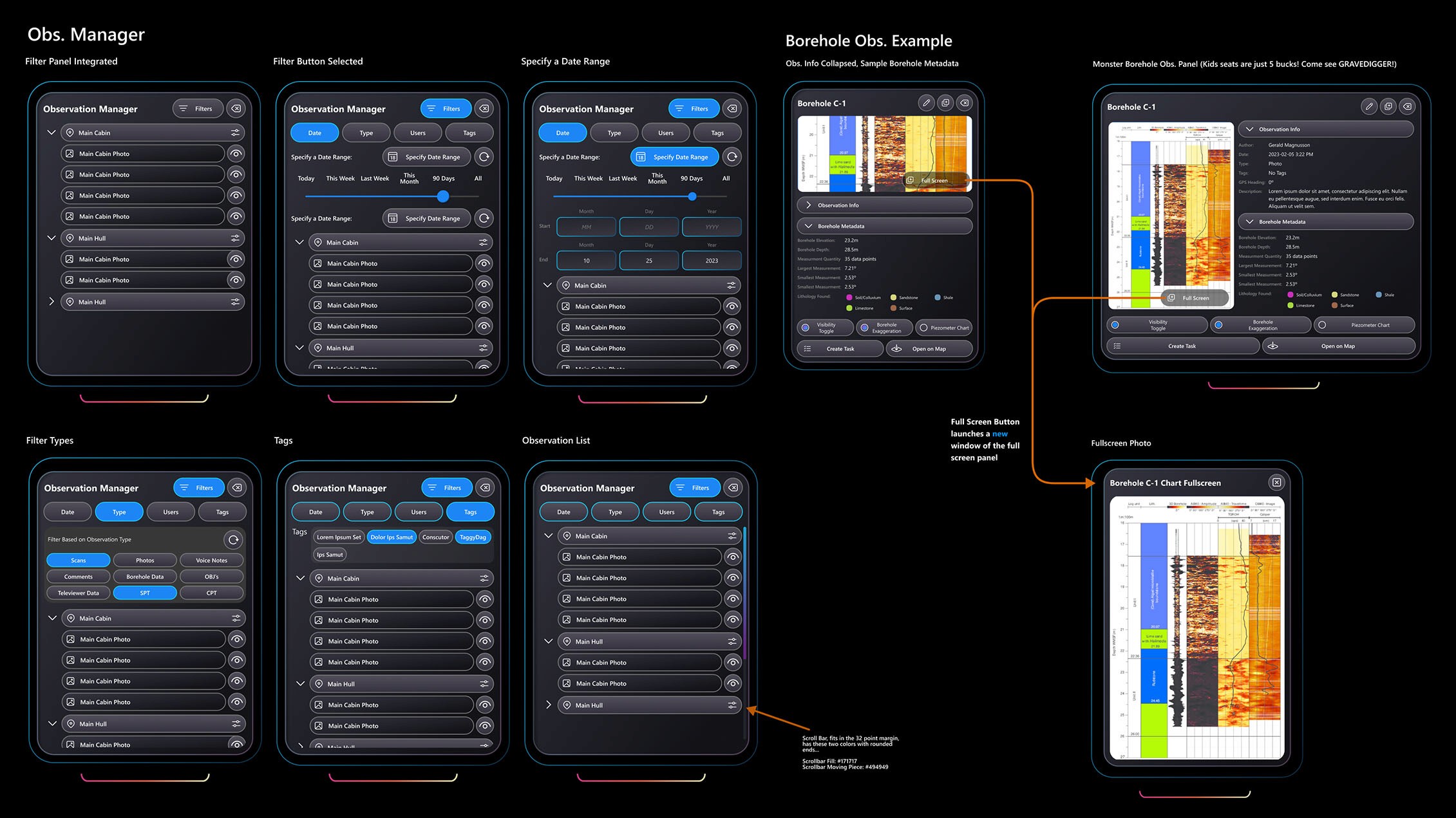
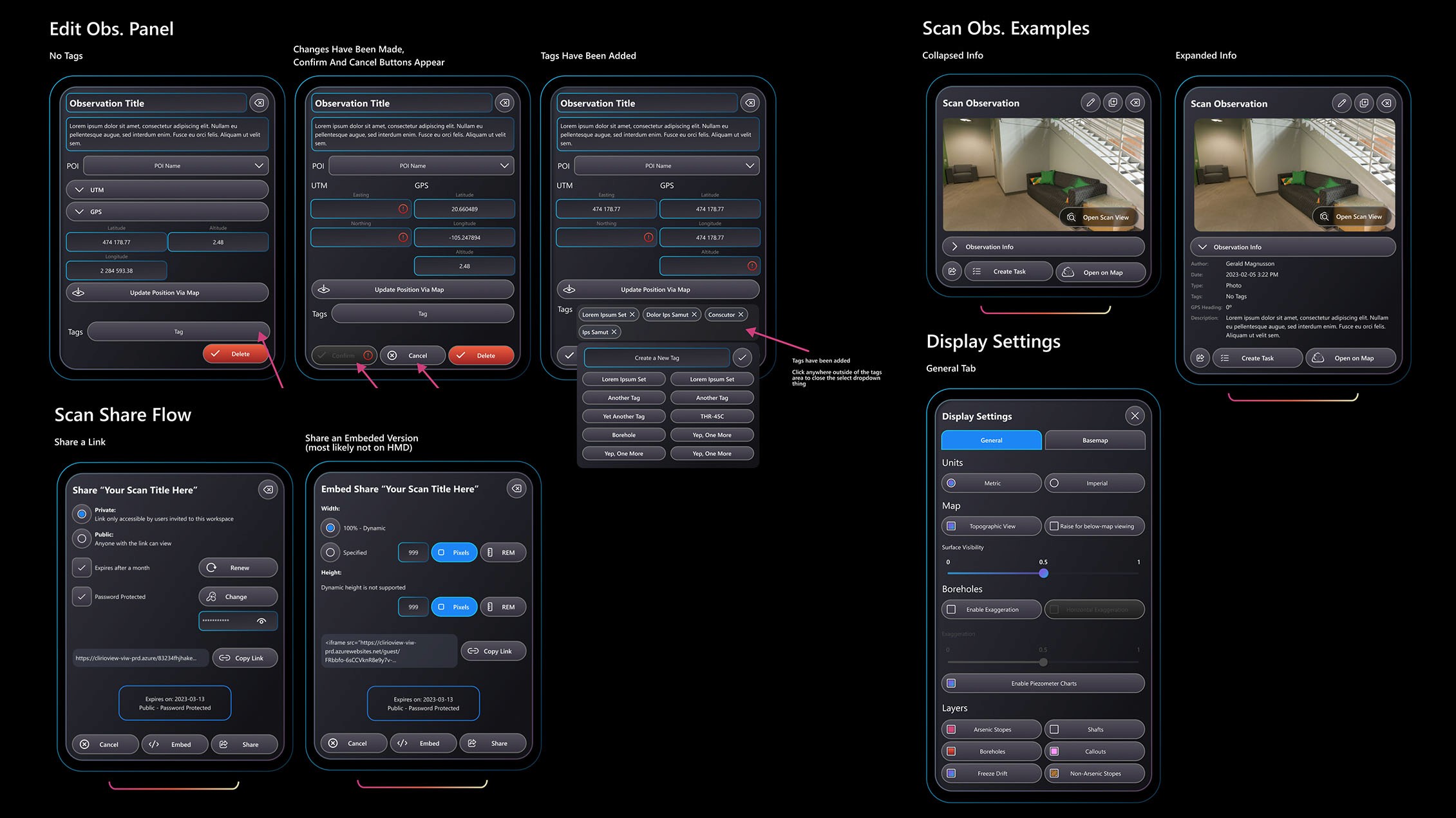
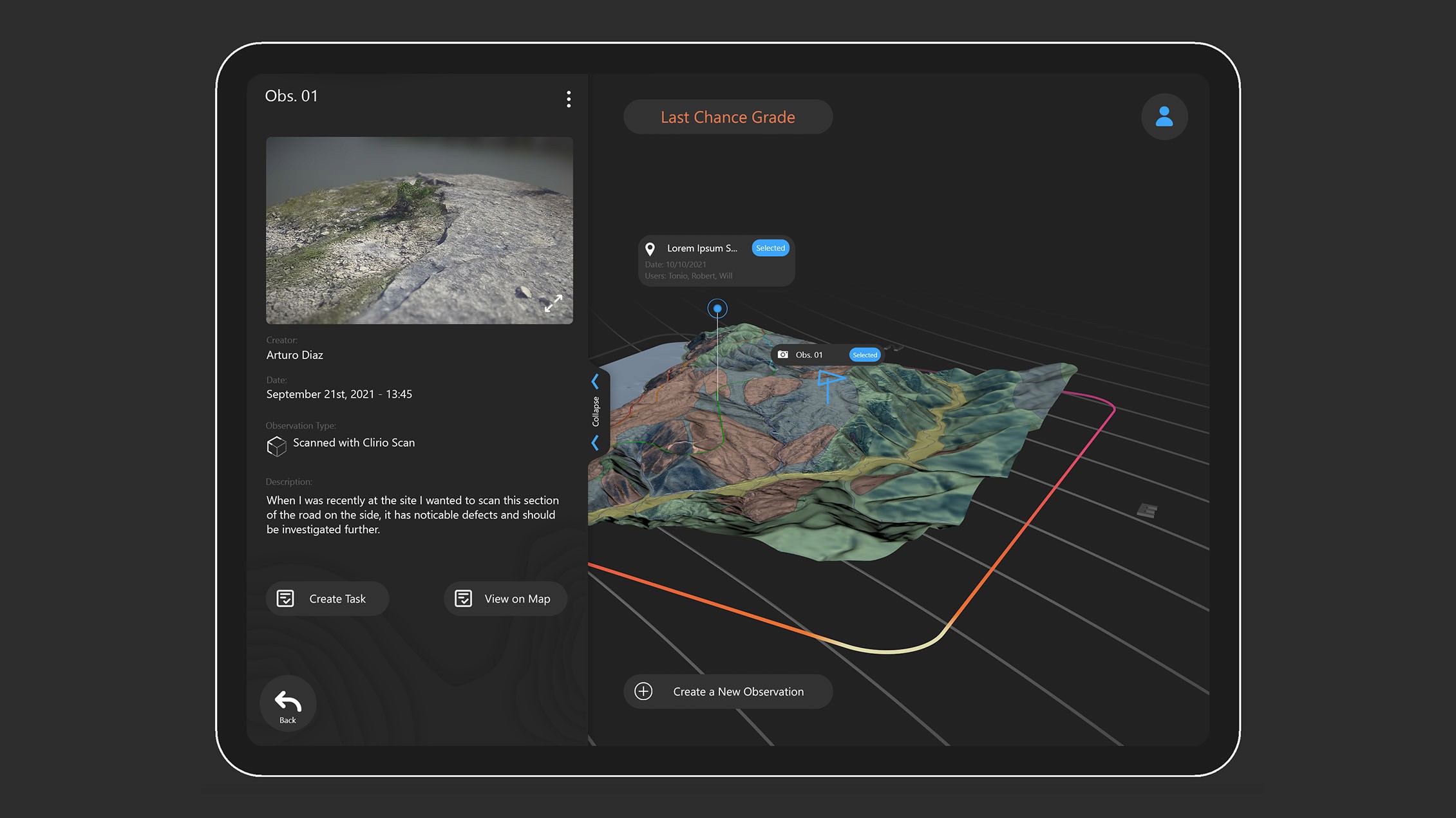
Designing an interface that works on both a flat mobile screen and inside a spatial headset requires a highly organized foundation. I built a comprehensive component library in Figma to map out core features like the Observation Manager. These layouts served as the master blueprint for our engineering team, ensuring visual hierarchy and interactions felt native across iOS, HoloLens, Oculus, and Vision Pro.

Delivering the Mobile Experience
To achieve on-site efficiency, the mobile app needed to be just as powerful as the headset. This iPad view of the Observation Manager is the final, field-ready execution. It allows engineers to interact with the 3D map and browse complex metadata—creator details, dates, callouts—without ever losing their spatial context. The design system I built in Figma ensured this experience maintained consistency with the XR interfaces.
More Case Studies
Trusted by